
Google Drive as Dumb Storage
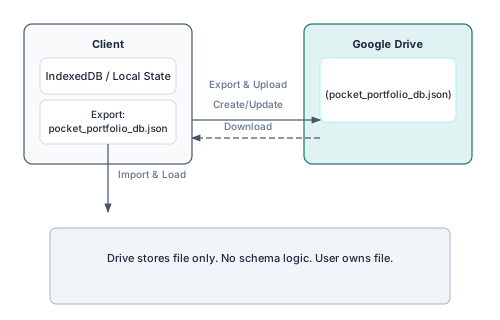
Google Drive isn't your backend. We use it as file storage for a single export file. The app creates/updates that file and can read it back. Drive does not run business logic, validation, or schema—it's "a folder in the cloud" for the user's own data.
Drive as "dumb storage"
Real-world sync constraints (bidirectional sync, version detection, conflict handling) are handled in the client. Drive is just the persistence layer. The client polls Drive metadata for version/revision changes and owns all sync and conflict semantics. The architectural point: Drive's role is minimal and does not change the "sovereign data" model.
User-owned files, user-owned schema
The file format is the same as the app's export: trades plus metadata. The user can copy the file, open it elsewhere, or move it. The schema is documented and owned by the product; the user owns the file and the data in it. Sync is optional and can be gated without changing the local-first model.
Trust model
- Today: Data is stored in Drive as JSON; OAuth scope is minimal (
drive.file: only app-created files). Tokens are client-managed. - Trust: The client trusts the Drive API for persistence and availability; the app does not trust Drive with interpretation of the schema—that stays in the app. Future work may add client-side encryption before upload so that Drive sees ciphertext only.
Conflict handling (e.g. optimistic locking with revision IDs) runs in the client; Drive only stores the final blob. So: Drive is dumb storage; the app owns the schema and sync semantics.
Part 7 of the Sovereign Serial. From Universal LLM Import.
Read the full Bestseller Edition or Try the app.